Amazon is a marketplace where a skincare purchase needs to be identified more precisely than the platform name. The exact product, variant, seller and fulfillment arrangement determine what you are ordering and which support route applies. A familiar listing title or a large review count does not replace those checks.
This assessment uses Amazon’s public return and third-party-seller guidance. We did not place an order, inspect a delivered product or authenticate any individual seller’s stock. We therefore do not make a blanket claim that all skincare on the platform is genuine, counterfeit, inexpensive or easy to return; those conclusions would require evidence about the selected offer.
- Review scope
- Multi-seller online marketplace
- Purchase detail
- Offer-specific; no universal skincare price
- Research basis
- Official pages; no product or shopping test
Inside this review
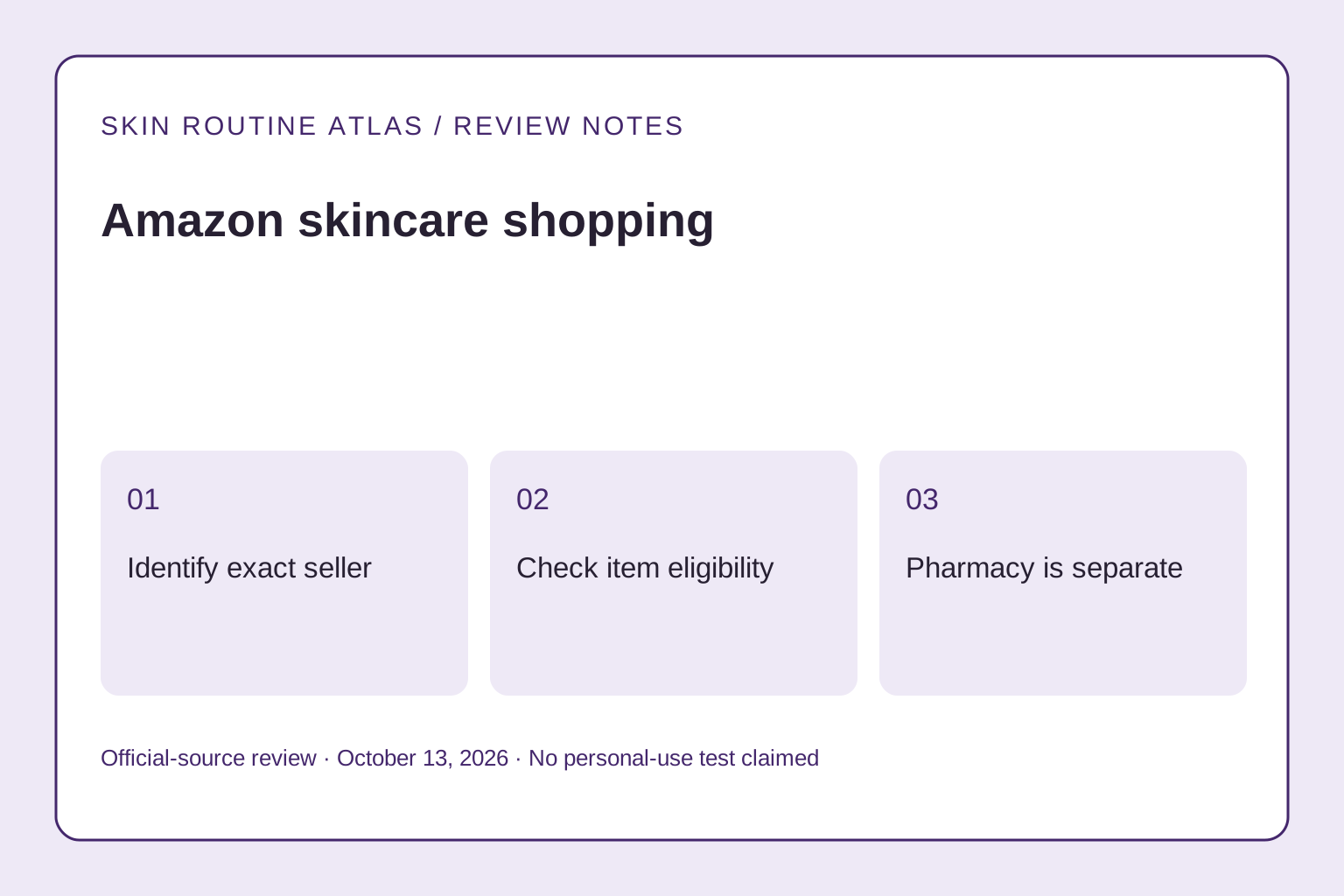
Record the offer before comparing the price
Write down the product’s complete name, size, variant and seller when comparing it with a manufacturer’s site or another retailer. A different bottle volume, multipack or formula version can create a misleading apparent discount. The buying decision should remain attached to the offer selected at checkout, rather than a price remembered from an earlier search.
Also distinguish the business selling the item from the party handling shipment. Amazon’s own guidance describes different return handling when a third-party seller ships its own inventory. That is a service distinction, not a laboratory assessment of the product. If authorized-retailer status matters to you, confirm the exact seller with the brand rather than infer it from the platform alone.
Read the label beyond the listing title
A serum’s marketing title may emphasize a popular ingredient while omitting the full formula or concentration. Compare the manufacturer’s current label with the selected listing and check the package when it arrives. If the product name, seal, expiry information or formula appears inconsistent, resolve that discrepancy before treating the item as an established part of your routine.
This is particularly relevant for sunscreen and over-the-counter drug products, where the actual label and directions matter. A general anti-aging phrase does not identify a prescription medicine, and a high cosmetic rating does not establish sun-protection performance. Keep treatment and protection decisions anchored to the exact product rather than the shopping platform’s recommendation system.
Return eligibility is an item-level check
Amazon’s public policy says most items can be returned within 30 days of delivery in original or unused condition, with exceptions. It tells buyers to check eligibility on the product detail page and, after ordering, in order history. That instruction is more reliable than assuming every opened skincare product qualifies for a free satisfaction return.
The policy also describes nonreturnable categories and final-sale items, with a separate contact route for damaged, defective or materially different goods. We do not turn those general provisions into a promise about a particular cosmetic. Save the return-by date and follow the instructions generated for the actual order if a return is needed.
A third-party return can go back to the seller
Amazon’s third-party help page explains that seller-fulfilled inventory is returned to the seller rather than Amazon. It describes approved return methods and the need to follow the supplied instructions. A shipping label, tracking record and correctly identified order are practical evidence if there is a later question about receipt or a refund.
We have not tested the platform’s dispute process, a seller’s response time or a refund timeline. A policy describing possible assistance does not prove how a specific case will be resolved. The useful buying question is whether the selected offer’s terms are clear enough before payment, particularly for a product that may be unsuitable once opened.
Retail skincare is separate from Amazon Pharmacy
The policy distinguishes Amazon Pharmacy products from ordinary retail returns. A pharmacy purchase therefore should not be evaluated using a cosmetic listing’s assumptions. This review does not assess prescribing, dispensing or clinical care, and it does not imply that ordering a cosmetic on Amazon provides a medical assessment.
Amazon can be convenient for a carefully identified replacement product, but its broad marketplace requires attention to the specific seller and item. Our recommendation is procedural rather than a store-wide quality score: compare the exact formula and quantity, preserve the offer details and verify return eligibility. The skincare decision still starts with the routine need and evidence for the product itself.
Questions worth writing down.
- Which exact product, seller and package am I comparing?
- What is refundable after opening, and what conditions apply?
- Does this replace something I already use?
Source record
Public pages checked October 13, 2026. Provider claims and starting prices are identified as published details, not independently tested results. Clinical information comes from the primary sources below. No clinician review is claimed.